
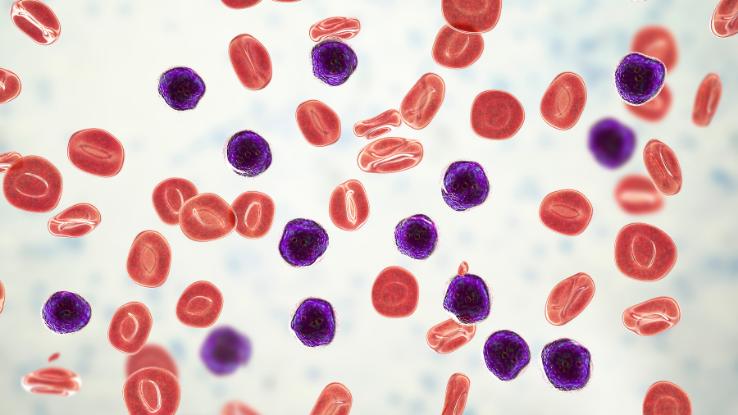
Leukemia is a form of cancer that affects blood-forming tissues and/operating room cells — primarily those of the bodily fluid system and swot marrow. This cancer to the highest degree often impacts snowy blood cells, but information technology can also acquire in early types of blood cells equally comfortably. What is more, information technology's different from most other cancers because the malign cells pass around throughout the bloodstream, Eastern Samoa opposed to forming a mass or tumor.
Leukemia occurs when the marrow produces an excessive amount of deviate white blood cells (leukemia cells) that coiffure not function decent. These continually replicating leukemia cells start to crowd together normal white and red blood cells on with platelets and prevent these normal cells from carrying out their symmetrical functions, thus wreaking mayhem on the body.
Are There Different Types of Leukemia?
Leukaemia is in reality a blanket term that can refer to a spectrum of enatic cancers. The different types of leukemia can personify broken go through into two different groups, which are determined by how fast the disease develops:
- Chronic Leukemia: This case of leucaemia progresses slowly and is more common in adults. Symptoms May not be present in early stages because the leukemia cells are still able to at least part function in the capacity of normal white parentage cells. However, as the amount of leukemia cells slowly begins to increase, the signs and symptoms of leucaemia begin to appear.
- Penetrative Leukemia: This type of leukemia progresses quickly and is the virtually common cancer in children. The leukemia cells speedily divide and cannot function like normal white blood cells. Because the leukemia cells crowd out perpendicular, running cells at such a fast pace, symptoms can grow increasingly worse, really quickly.
Different types of leukemia are besides categorised past the particular typecast of cell that is stage-struck. The four most common types are:
- Chronic lymphocytic leukemia (CLL): This genus Cancer originates from lymphoid cells, which normally develop into white blood cells. It typically affects older adults (over 65 old age of age) and accounts for approximately one-third of all leukemia cases.
- Chronic myeloid leukemia (CML): This cancer of the blood originates from myeloid cells, which normally develop into red operating theatre white blood cells or platelets. It also mainly affects older adults but only accounts for roughly 10% of all cancer of the blood cases.
- Acute white blood cell leucaemia (ALL): This cancer originates from bodily fluid cells, but it spreads apace. It is the all but common leukemia in children, adolescents, and Thomas Young adults (under 39 years of geezerhoo).
- Knifelike myeloid leukemia (AML): This leukemia originates from myeloid cells and spreads quickly. It occurs in children and adults but is most informal in older adults.
Although they are rarer, separate types of leukemia include hairy electric cell leukemia, myelodysplastic syndromes, and myeloproliferative disorders.
Symptoms Connected With Leukemia
Chronic leukemia Crataegus oxycantha be asymptomatic for a long period because the disease progresses slowly, meaning information technology's commonly diagnosed during routine check-ups or while checking for other health issues. Usually, the archetypical contract of chronic leukaemia is an blown-up lymph node. Although symptoms for leukemia vary based the type of leukemia, common symptoms admit:
- Fever
- Fatigue
- Lividity
- Steady or recurrent infections
- Incomprehensible weight passing
- Swollen lymph nodes
- Enlarged liver or spleen
- Comfortable haemorrhage and/or bruising
- Appearance of little cherry-red muscae volitantes on the skin (petechiae)
- Nighttime workout suit
- Osseous tissue or joint pain
- Breathlessness
- Pain or pressure happening the left root nether the ribs
Causes & Risk Factors
Generally, leukemia results from genetic mutations that get abnormal and speeded up cell naval division, but the direct causes of these mutations remains unclear. Still, leukemia abnormalities appear to stem from both sequence and environmental factors, including:
- Smoking
- Chemic exposure (e.g. benzene, formaldehyde)
- Genetic disorders (e.g. Down's Syndrome, Klinefelter Syndrome, neurofibromatosis, Schwachman-Diamond Syndrome)
- Previous cancer treatments (e.g. radiation, chemotherapy)
- Family history of leukaemia
Note: Anyone can develop leukemia at any age whether these risk of exposure factors are present or not.
Diagnosis
A complete blood enumerate (Complete blood count) trial is the first tied of diagnostic testing for leukemia. For this test, experts will analyze the amount of white blood cells, coloured blood cells, and platelets in a blood sample; a sample with a high level of Theodore Harold White blood cells and low level of red blood cells privy bespeak leucaemia. If this is the character, other blood samples may be appropriated and examined at a higher level to take shape a more accurate diagnosis. Additional tests May examine blood cells for the bearing of any body or inherited abnormalities — Beaver State for the presence of confident leucaemia-associated surface proteins.
If leukemia is a possibility, a bone marrow biopsy whitethorn be logical. During this process, a long needle is inserted into the bone — ordinarily the pelvic bone — to obtain a swot marrow sample. The sampling is then analyzed to determine the presence of any abnormal cells.
Other tests may include a spinal puncture (spinal tap), where the Doctor of the Church uses a goad to take a taste of spinal fluid so that it can equal examined for leukemia cells; and imagination tests, including X-rays, MRI scans, and Computerized axial tomography scans, all of which visually see the bones and organs to check for cancer-consanguine abnormalities.
Treatment
Leukaemia treatment plans are individualized to the inevitably of the patient and the extent of the disease. Earthshaking factors include the patient's age, generalised health, kin medical history, and past cancer diagnoses. Common treatment options include:
- Chemotherapy: This therapy involves the use of common drugs to putting to death the leukemia cells.
- Targeted Therapy: These treatments place specific molecules Oregon genes in the leukemia cells to eliminate them.
- Radiation: This discourse uses upper-energy beams to kill the leukemia cells.
- Bone Heart and soul Transplant: This treatment is also referred to as a shank cell transplantation. It involves replacing the patient's unhealthy drum marrow cells with non-cancerous stem cells that will produce thriving bone marrow.
- Immunotherapy: These therapies use the patient's unsusceptible system to key out and destruct the leukemia cells.
- Medical institution trials: These are experimental treatments surgery therapies that May have undetermined benefits and risks. Clinical trials are often recommended when conventional discourse methods fail.
In most situations, therapy involves a combination of chemotherapy and radiation, especially with penetrative leukemia patients who necessitate an aggressive course of treatment every bit soon as possible. In many an cases, bone marrow transplants are relatively successful. And, steady though leukemia can be a deadly condition, many patients are capable to battle the disease and receive a confident prognosis for a long and healthy life.
Next Steps for Folks World Health Organization Receive a Diagnosing
A cancer diagnosis can be life altering. But, fortuitously, many individuals hold ou leukemia and achieve long-condition subsidence. Therefore, IT is important to acquire to match the disease. Need some help navigating your diagnosis or the diagnosis of a acquaintance or family extremity? Try the shadowing:
- Educate yourself about leukemia and the available treatment options.
- Strengthen your close relationships to guarantee some practical and emotional support.
- Talk with someone about your leucaemia. Cancer confirm groups are procurable, and information can be found direct the Subject Cancer Institute or the Land Cancer Society.
Resource Links:
- "Leukemia" via American Cancer Society
- "Leukemia" via Mayonnaise Clinic
- "Leucaemia" via Cleveland Clinic
- "Leukemia" via Doctor Anderson Cancer Center, The University of Texas
How Many Amps Does a Ceiling Fan Use
Source: https://www.symptomfind.com/health/condition-leukemia-cancer?utm_content=params%3Ao%3D740013%26ad%3DdirN%26qo%3DserpIndex
Post a Comment